Thursday, December 12, 2013

Aloo Gobhi

Photo Credit: Pankajune via Compfight cc

I have had a fascination with aloo gobhi (or aloo gobi as it is sometimes written) since watching the love poured into making it in the film, Bend It Like Beckham.  Aloo is "potato" in Hindi and ghobi is short for phulagobhi or "cauliflower" in Hindi.  So, aloo gobhi means potatoes and cauliflower.  

Now this seems a strange combo in Western cuisines, but it is a delicious dish.  

Potatoes have a low glycemic index and thus are not a very good vegetable for diabetics.  Sweet potatoes on the other hand are packed with fiber and have a moderately high glycemic index.  So, I make my aloo gobhi as mitha aloo gobhi or sweet potatoes and cauliflower.  This dish is surprisingly delicious, and my adaptation of a recipe originally in Anupy Singla's The Indian Slow Cooker.

1 head of cauliflower, chopped into pieces
2 medium sweet potatoes, cooked (in microwave usually), peeled, and cut into cubes
1 large onion, chopped
1 can diced tomatoes
1 Tablespoon ginger paste (or fresh, chopped ginger)
1 Tablespoon minced garlic
4 cayenne peppers, stems removed
1 Tablespoon cumin seeds or ground cumin
1 Tablespoon red chili pepper
1 Tablespoon garam masala
1 Tablespoon salt
1 teaspoon turmeric powder
3 Tablespoons olive oil
1 Tablespoon fresh cilantro, chopped

Cook, peel and cube your sweet potatoes.  I usually cook mine in the microwave in 6 minutes on high.

Add the sweet potato and all the other ingredients EXCEPT the cilantro to your slow cooker.  Cook for 6 hours (the 4 hour setting will work too -or the 8 hour if you will be out of the house for awhile) in your slow cooker.  

Stir in some fresh, chopped cilantro and serve hot.  May be eaten with rice or not.  

NOTE:  This dish is great the next day when warmed up for lunch or dinner.


DIETS:
Diabetic:  yes
Gluten Free:  yes
Nightshade Family Free:  no
Paleo:  yes
SugarBusters:  yes
Sugar Free:  yes
Vegan:  yes
Vegetarian:  yes
Wheat Free:  yes

Notice:  Be sure to check with your doctor and nutritionist about the safety of any eating plan for you.  Also, check ingredients as different brands and products may have different ingredients or have changed them since this post.  Some calories are estimates based on packaging.  

Wednesday, December 11, 2013

Indian-Style Vegetable and Egg Fried Rice

Photo Credit: anantal via Compfight cc
This yummy recipes comes from the kitchen of my friend Sharmi:


Ingredients: 2 cups of basmati rice, 3 cups of water, oil, ghee (clarified butter) or butter, cinnamon stick, green cardamom, whole cloves, bay leaves, 1/2 cup raw cashew pieces, 1/2 cup of chopped onion, frozen peas, carrots, 3 large eggs, salt and sugar

1. 2 cups of Basmati rice, washed and drained
2. Soak 4 to 6 strands of saffron in half a cup of warm milk and set aside
3. In a wok heat 3 tablespoon oil and 1 tablespoon ghee (clarified butter), if you don't have any just add 1/4 th of a butter stick
4. Add half a cinnamon stick, 3 whole green cardamom, 4 whole cloves and 1 bay leaf
5. Add chopped onion and stir fry
6. Add vegetables and stir fry
7. Add pre-soaked rice and fry lightly
8. Add salt to taste and little bit of sugar
9. Add 3 cups of water and stir
10. Cover the rice and put it on medium heat and let it boil

If you want to use rice cooker then follow up to step 8 and pour everything in the rice cooker and follow step 9.

11. In a separate frying pan fry the eggs in oil and add to the rice when it's done
12. Serve hot

DIETS:
Diabetic:  yes* (in limited quantities, Basmati rice has a moderately high glycemic index)
Gluten Free:  yes
Nightshade Family Free:  yes
Paleo:  no
SugarBusters: yes
Sugar Free:  yes* (if made with a moderate/high glycemic index rice)
Vegan:  yes* (if you leave out the fried egg)
Vegetarian:  yes* (if you leave out the fried egg)
Wheat Free:  yes
200 Calories or Under:  yes (in limited quantities)

Notice:  Be sure to check with your doctor and nutritionist about the safety of any eating plan for you.  Also, check ingredients as different brands and products may have different ingredients or have changed them since this post.  Some calories are estimates based on packaging.  


Tuesday, December 10, 2013

Shrimp in Coconut Sauce

Photo Credit: PratikSurti via Compfight cc
This recipe is another from the Bengali kitchen of my friend Sharmi.


1 pack large or extra large raw shrimp, peeled and deveined
salt
oil
1 onion
5-6 cloves of garlic
1 small piece of ginger
3-4 pods of green cardamom
1 cinnamon stick
4 whole cloves
1 bay leaf
ghee (clarified butter)
1/2 teaspoon turmeric powder
salt to taste
1 can coconut milk

OPTIONAL:  1/2 teaspoon sugar

1. Wash the shrimp and marinate with 1/2 teaspoon of turmeric powder and salt to taste
2. In a coffee grinder, grind 1 cinnamon stick, 4 whole cloves and green cardamom
3. Chop 1 onion, 5 or 6 cloves of garlic and a small piece of ginger together
4. Heat oil in a wok or cooking pan
5. Stir fry the shrimp and set aside
6. Add ghee (clarified butter) to the remaining oil or you may add a little more oil if needed
7. Add the spices you previously ground and 1 bay leaf
8. Add the chopped onion, ginger and garlic and stir
9. Add the shrimp and a little bit of sugar and stir
10. Add 1 can of coconut milk to the shrimp and stir well (shake the can well before opening)
11. Put on a low flame to a low boil/simmer
12. Serve hot

DIETS:
Diabetic:  yes
Gluten Free:  yes
Nightshade Family Free:  yes
Paleo:  yes* (if made without ghee)
SugarBusters: yes
Sugar Free:  yes
Vegan:  no
Vegetarian:  no
Wheat Free:  yes
200 Calories or Under:  yes (in limited quantities)

Notice:  Be sure to check with your doctor and nutritionist about the safety of any eating plan for you.  Also, check ingredients as different brands and products may have different ingredients or have changed them since this post.  Some calories are estimates based on packaging.  

Monday, December 9, 2013

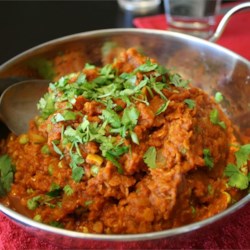
Red Lentil Curry

Emma Maher over on Allrecipes.com

This recipe comes from Emma Maher over on Allrecipes.com.  I make this dish every month or so because it is such a big hit at my house.  This is the first time I've posted a link to another recipe site, but this Indian-inspired dish is just too delicious to not share.

This dish warms up very nicely for leftovers.


DIETS:
Diabetic:  yes*  (has a bit of sugar which you can leave out if you wish)
Gluten Free:  yes (though be careful they were not packaged and contaminated at a flour mill)
Nightshade Family Free:  no (has chili pepper)
Paleo:  no (contains legumes)
SugarBusters:  yes* (if you leave out the bit of sugar)
Sugar Free:  yes* (if you leave out the bit of sugar)
Vegan:  yes
Vegetarian:  yes
Wheat Free:  yes
200 Calories or Under:  yes

Notice:  Be sure to check with your doctor and nutritionist about the safety of any eating plan for you.  Also, check ingredients as different brands and products may have different ingredients or have changed them since this post.  Some calories are estimates based on packaging.  


Sunday, December 8, 2013

Chicken Tikka Masala

I love Chicken Tikka Masala!  I love Tofu Tikka Masala too!  Many non-Indian people do love this dish.  For many -myself included- it is often the dish that first introduces non-Indians to the complexity and deliciousness of Indian food.

Like a number of dishes served in the West, Chicken Tikka Masala is actually part of a distinctive Anglo-Indian cuisine that began during the Raj, the British colonial period in India.  This new hybrid cuisine adapted Indian ingredients and cooking methods to British tastes.

In fact, there is some controversy over whether Chicken Tikka Masala was actually developed in South Asia or created by Indian restaurateurs in Great Britain.  Whatever its origins, Chicken Tikka Masala is hugely popular in Great Britain.  I hope you will love it as well!

I copied down my original recipe from somewhere on the Web and have been tweaking it for some years. My hat off to whoever and wherever this great recipe was first born...and I hope you will like the tweaks I have made after experimenting with this dish.

This dish is traditionally made with chicken, but you can also optionally make this dish with tofu, turkey, vegetables such as potatoes or mushrooms, or paneer (a type of Indian cheese).  This dish has a long list of spices but is otherwise not complicated to make.  You can experiment with what spices you have if you do not have all of the recipe's spices.

3-4 boneless chicken breasts, cut into cubes
1 onion, minced
1 jalapeno pepper, minced
1 clove garlic (or 1/2 teaspoon minced garlic)
2 Tablespoons butter
1 cup plain yogurt
1 Tablespoon lemon juice
4 teaspoons ground cumin
1 teaspoon ground cinnamon
1 Tablespoon ground coriander
3 pods of cardamom
1 Tablespoon garam masala (available at Indian grocery stores)
2 teaspoons cayenne pepper
1 Tablespoon fresh ground or minced ginger
4 teaspoons salt
2 teaspoons paprika
1 can (8 ounces) tomato sauce or 2 small cans of tomato paste
1 cup cream
1/4 cup cilantro, chopped

OPTION:  Add 1 Tablespoon brown sugar for a slightly sweeter version.
OPTION 2:  If you like a hotter -read fiery- chicken tikka masala, add more cayenne pepper or whole cayenne peppers.


Saute the chicken and minced onion in 1 Tablespoon of the butter until the chicken is cooked.

In a separate large saucepan or stock pot, melt the remaining 1 Tablespoon butter and saute the jalapeno and garlic for 2 minutes.  Add the yogurt, lemon juice, cumin, cinnamon, cayenne pepper, ginger, coriander, cardamom, garam masala, salt, paprika, tomato sauce, cream, and cilantro.  Simmer on low heat for 20 minutes.

Add the cooked chicken and onions to the sauce.  Simmer for 10 minutes.

Serve with a good Basmati rice and/or naan (a delicious Indian bread usually served with hot butter melted on top).

NOTE:  The original dish called for 7 teaspoons of salt, but I have cut back.  You may wish to salt more to your own tastes.  With all these wonderful spices, this dish improves after a day of sitting in the refrigerator and makes excellent leftovers.

DIETS:
Diabetic:  yes*  (but use Basmati, brown, or other rice with a high glycemic index)
Gluten Free:  yes
Nightshade Family Free:  no (has peppers)
Paleo:  no (has dairy)
SugarBusters:  yes* (but leave off the optional brown sugar and use Basmati, brown, or other rice with a high glycemic index)
Sugar Free:  yes* (but leave off the optional brown sugar)
Vegan:  no
Vegetarian:  yes* (if prepared with tofu or vegetables)
Wheat Free:  yes
200 Calories or Under:  no

Notice:  Be sure to check with your doctor and nutritionist about the safety of any eating plan for you.  Also, check ingredients as different brands and products may have different ingredients or have changed them since this post.  Some calories are estimates based on packaging.  

Friday, December 6, 2013

Pulao Rice

Photo courtesy of Wikipedia.
Pulao has literally been conquering the hearts and stomachs of people for over 2,000 years.  This particular recipe for this wonderful dish comes from my friend Sharmi Ray, a native of Kolkata (formerly Calcutta), India.  Sharmi first introduced me to pulao, a sweet, incredibly fragrant dish with a long history.  My mother loves this dish, and hopefully you will too!

Pulao has many names.  Americans may be most familiar with the Turkish term, rice pilaf.  Pilaf in turn comes from a Persian word, and the dish itself can be found in cuisines from Indonesia to Spain.

Wikipedia has an interesting historical tidbit.  Historical documents record that when Alexander the Great conquered the Persian Empire and was in the satrapy/province of Sogdiana (now in Central Asia), he was served what appears to be pulao.  He and his troops reported loved this fragrant rice and took the recipe home with them to Macedonia and Greece.

  • 2 cups of basmati rice
  • 3 cups of water
  • 1/2 cup of milk
  • 3 tablespoons oil
  • 1 tablespoon ghee (clarified butter) or butter
  • saffron
  • 1/2 teaspoon ground nutmeg
  • 1 cinnamon stick
  • 3 whole green cardamom pods
  • whole cloves
  • 1/2 cup raw cashew pieces
  • raw almond pieces (optional)
  • salt to taste
  • 1/2 teaspoon sugar
  • raisins (optional)
  • slivered carrots (optional)

Wash and drain 2 cups of Basmati rice.

Soak 4 to 6 strands of saffron in half a cup of warm milk and set aside.

In a wok or large skillet heat 3 tablespoons oil and 1 tablespoon ghee (clarified butter).  If you don't have ghee, just add 1/4 of a stick of butter.

Add half a cinnamon stick, 3 whole green cardamom pods,  and 4 whole cloves to the oil/butter/ghee.

Add half teaspoon of ground nutmeg.

Option:  You can also add raisins and slivered carrots for a sweeter taste and more color.

Add the raw cashew nuts and almonds.  Stir fry. (If you got roasted nuts then skip this step and add directly to rice after adding the rice to the oil in the next step.)

Add the pre-soaked rice to the spices and nuts and stir fry lightly.

Add salt to taste and a teaspoon of sugar.

Add 3 cups of water and stir the mixture.  (Alternately, add the rice and spice mixture to your rice cooker with 3 cups of water.)

Add the saffron milk

Cover the rice and put it on medium heat and let it boil. (Alternatively, turn on your rice cooker.)

Check few times until the rice is done. If the rice needs more water just sprinkle on top, stir, and leave it covered with very little or no heat. The rice's heat will cook it further.

Serve hot.

From Sharmi Ray, Lexington, 2013.


DIETS:
Diabetic:  yes* (Basmati rice has a high glycemic index but consume no more than 1 cup and substitute the sugar)
Gluten Free:  yes
Nightshade Family Free:  yes* (do not use tomatoes as an option)
Paleo:  no
SugarBusters:  yes* (if you use Basmati, brown or other high glycemic index rice and leave out the sugar)
Sugar Free:  yes* (if you leave out the sugar or use a sugar substitute)
Vegan:  yes
Vegetarian:  yes
Wheat Free:  yes
200 Calorie Meal:  yes* (if you consume no more than 1 cup or less of the dish and leave out the nuts)

Notice:  Be sure to check with your doctor and nutritionist about the safety of any eating plan for you.  Also, check ingredients as different brands and products may have different ingredients or have changed them since this post.  Some calories are estimates based on packaging.  

Thursday, December 5, 2013

Fiery Eggplant


For Indian Week, I wanted to repost this delicious recipe and put in a plug for Anupy Singla's excellent slow cooker Indian cookbook, The Indian Slow Cooker:  50 Healthy, Easy, Authentic Recipes.


  • 1 large eggplant, cut into wedges
  • 1 can diced tomatoes
  • 1 Tsp ginger paste or a 2 inch piece of fresh ginger, diced
  • 1 Tsp minced garlic or 10 cloves of fresh garlic
  • 2/3 c vegetable oil
  • 1 Tsp fennel seeds
  • 8-10 cayenne, Serrano, or green Thai chilis, stems removed, chopped
  • 2 Tsp ground coriander
  • 1 tsp turmeric powder
  • 2 tsp red chili powder
  • 1 Tsp salt


Place the cut eggplant in a colander sitting on a plate.  Sprinkle with salt.  Let stand at least 30 minutes or more.  The eggplant will release a brown liquid.  This process will remove much of the eggplant’s bitterness.  

Then wash off the salt and empty the eggplant onto a paper towel to dry somewhat.

Add the diced tomatoes, ginger paste, and minced garlic to the crockpot. 

Saute the fennel seeds in about 1 Tsp oil over medium-high heat.  Then scrap the seeds and oil into the crockpot.  The heating releases the fennel’s flavor.

Add the vegetable oil, chilis, coriander, turmeric, and eggplant to the crockpot.  

Cook on low for 3-4 hours.

Add salt to taste when the eggplant is done.

Adapted from Anupy Singla’s The Indian Slow Cooker:  50 Healthy, Easy, Authentic Recipes, 2010.

DIETS:
Diabetic:  yes
Gluten Free:  yes
Nightshade Family Free:  no
Paleo:  yes
SugarBusters:  yes
Sugar Free:  yes
Vegan:  yes
Vegetarian:  yes
Wheat Free:  yes
200 Calories or Under:  no (this dish is too rich in oils)

Notice:  Be sure to check with your doctor and nutritionist about the safety of any eating plan for you.  Also, check ingredients as different brands and products may have different ingredients or have changed them since this post.  Some calories are estimates based on packaging.  

Wednesday, December 4, 2013

Pakoras

Photo Credit: bro0ke via Compfight cc
Pakoras are delicious Indian appetizers.  I like to tell people they are India's answer to the hushpuppy. ;)

It seems many cultures develop a dish consisting of a fried dough.  India has several, but I am most familiar with pakoras since they are often served in Indian restaurants in the US.

Serve pakoras hot with various chutneys such as tamarind, mango, cilantro, or onion chutney.


This recipe calls for besan, chickpea flour, and garam masala, a spice mix.  You can find chickpea flour at Indian specialty grocers or can substitute regular, wheat flour though the consistency and taste won't quite be the same.  I also urge you to experiment with different spices as additions to your batter.  Garam masala, coriander, garlic, various curry spice blends, cumin, and other flavors can make for nice additions.  Find your favorite!

1 cup chickpea flour
3/4 cup water
1 teaspoon garam masala (optional)
Vegetables (usually spinach leaves, cauliflower florets, or onion rings)
Vegetable oil enough for your deep fryer

Mix the chickpea flour, water, and spice together.  The batter should be a thickish consistency similar to a hushpuppy or thick pancake batter.

Chop your spinach (my favorite vegetable for pakoras) and mix into the batter.  You can use this recipe with onions cut into rings, cauliflower florets, or about any vegetable.

Heat your oil.  Slide a spoonful of the vegetable batter into the oil and cook until a dark, golden brown.

Remove the fried pakora and drain on a paper towel on a plate.

Serve hot with your favorite chutney.

DIETS:
Diabetic:  no
Gluten Free:  yes if you use chickpea flour which is gluten free
Nightshade Family Free:  yes
Paleo:  no
SugarBusters:  no
Sugar Free:  yes but contains carbohydrates
Vegan:  yes
Vegetarian:  yes
Wheat Free:  yes if you use chickpea flour which contains no wheat flour
200 Calories or Under:  no (this dish is too rich in oils and carbs)

Notice:  Be sure to check with your doctor and nutritionist about the safety of any eating plan for you.  Also, check ingredients as different brands and products may have different ingredients or have changed them since this post.  Some calories are estimates based on packaging.  

Tuesday, December 3, 2013

Fruit Chutney

Photo Credit: checkmihlyrics via Compfight cc

This recipe comes from my friend Sharmi Ray.  A native of Kolkata (formerly Calcutta) in the eastern Indian region of Bengal, Sharmi shared with me her recipe for the preserves-like chutney.  While chutney can be made with various ingredients to be savory or sweet, this recipe is for a delicious, fruity, sweet version.  Enjoy!


  • Apples, pineapple, mixed fruits, or tomatoes (your choice, fresh or diced in a can)
  • 2 tablespoon oil
  • ½ teaspoon mix of mustard seeds, fenugreek, and fennel seeds
  • Dash of salt
  • ~1 cup sugar
  • Raisins or pieces of dates

Cut the fruit into small pieces.  You may also use a can of diced fruit/tomatoes.

Heat 2 Tsp oil in a cooking pan.  Add seed mix.  Be aware it will splatter.  

Immediately add the diced fruit.  

Add the salt.  

Cover and cook on medium heat until the fruit becomes soft.  Stir occasionally.  If there appears to be insufficient water from the fruit, add some water.  

Add sugar according to your taste.  Do not add sugar until the contents are entirely tender!  

Bring the sugar and fruit mixture to a boil.  

Add raisins or pieces of dates.  

Let the chutney cool.  Can or store in the refrigerator.

From Sharmi Ray, Lexington, 2008.


DIETS:
Diabetic:  no
Gluten Free:  yes
Nightshade Family Free:  yes* (do not use tomatoes as an option)
Paleo:  no
SugarBusters:  no
Sugar Free:  no
Vegan:  yes
Vegetarian:  yes
Wheat Free:  yes

Notice:  Be sure to check with your doctor and nutritionist about the safety of any eating plan for you.  Also, check ingredients as different brands and products may have different ingredients or have changed them since this post.  Some calories are estimates based on packaging.  

Monday, December 2, 2013

Indian Week!

This week I'm posting a series of recipes from India or inspired by Anglo-Indian cuisine. Several Indian friends have provided me these wonderful recipes from their own collections.  I'm also adding some recipes I've found and adapted from cookbooks.

I came late to enjoying Indian food.  I first tried Indian food at a rather mediocre Indian restaurant in North Carolina in the 1980s.  The food -or at least what I chose- was not very good, and for over a decade I decided I didn't like Indian food. It was not until the 1990s when I moved to Lexington and had delicious home-cooked food by my Sri Lankan classmate, Lavi, that I learned Indian food is like all other foods:  good when prepared well and not so good when badly prepared.  My friend Sharmi and friend/former graduate student Roshni also educated me greatly about Indian cooking.  I am thankful to have met such three wonderful cooks!


Anglo-Indian Cooking

I am certainly no expert on Indian cooking.  Most of what I know about Indian food is really more knowledge of the Anglo-Indian cuisine developed for British tastes and now popularized in American Indian restaurants.  Still, I'm going to give you my limited understanding of Indian regional specialties and how they have influenced the delicious foods we find in Indian restaurants in the US.

First of all, more human beings live in south Asia (India, Pakistan, Nepal, Bhutan, and Sri Lanka) than live in any other region of the world.  This region is enormously diverse in terms of ethnic groups, languages, religions, and of course, food.

Like every country, India's regional cuisines are influenced by the climates and crops that grow in different regions.  Western India consists of arid and desert areas.  The North contains the foothills and mountains of the Himalayas.

In general, the North and West grow more wheat.  The South and more wet East use more rice.  Red meat is more common in the north with fish along the coasts and vegetarian foods being more common in the South.  Gujurat, a west Indian state, is also famous for its vegetarian-based cuisine.

The areas along the border with Pakistan and the western Ganges Valley have a long history of influence by Muslim groups from central Asia.  These groups brought elements of a cuisine built around herding and dairy.  Thus, dairy foods such as butter, ghee (a refined butter), and yogurt usually come from this part of India.  Madhya Pradesh and Haryana are states with these influences and cited as sources for yogurt-based dishes like korma chicken and lassi (a yogurt drink).

While Punjab is listed as a north Indian state, it is an ancient region now divided between India and Pakistan. Much of the Anglo-Indian and Indian foods we find in American restaurants come from this region including: tandoori chicken, naan (a wheat bread like a leavened tortilla), pakoras (India's answer to the hushpuppy), and paneer (a fresh cheese usually pressed and cut into cubes).

The South also has contributed to Anglo-Indian cuisine with more vegetarian dishes such as dal (lentil-based stews of sorts), sambar (another lentil-based dish), and biryani (a popular rice dish supposed created at the former Mughal court kitchens).  Many of India's spices as well as coconuts grow in the South.  Southern Indian cooking is often spicy -even by Indian standards- and coconut and coconut milk is more frequently used than the butter and ghee used in the North.  The South also contributed mulligatawny, a peppery stew whose interesting name is a corruption of the Tamil phrase for "pepper water".

Eastern Indian cooking is perhaps the least known in the Americas.  West Bengal and other coastal and river areas emphasize a lot of fish and seafood in their cuisine.  Hot chilis are also common in Bengali cooking.
Away from the coasts in Assam and surrounding areas, tea is grown in the hill country there.  Several areas also have a proud tradition of brewing local beers.  Chinese, Tibetan, Burmese, and Thai cooking influences also are common in the north and northeast of the Eastern region.  Sikkim, a small state in the Himalayas, is famous for its momos (dumplings very similar to Chinese potstickers or jiaozi or Japanese gyoza).

The Andaman and Nicobar Islands are part of the country of India but largely remote and isolated.  Many of the tribal Andaman Islanders have almost no contact with outsiders and rely on fishing and fruit for their diets. So their contributions to Indian cooking has been rather limited.

Indian cooking has far more variety than my brief description covers, but I hope you will have some frame of reference for understanding the delicious recipes coming this week!